
Got it. Thank you.
Your request has been submitted. Appointment availability and timing still need confirmation.
Crawl Space Encapsulation in Dayton, OH
Crawl space encapsulation in the Dayton area seals the space off from ground moisture with a vapor barrier across the floor and walls, plus drainage and a pump where water collects. It stops the damp Miami Valley soil under the house from feeding moisture, mold, and musty air up into the rooms above.
A crawl space is easy to ignore because you rarely go down there, but a wet one does not stay put. In the Miami Valley the damp clay soil under the house gives off moisture that rises into the framing and the rooms above, which is where the musty smell and the cold, damp floors come from. Encapsulation seals that ground off from the house, so the moisture stops making the trip upward.
Dry it before you seal it
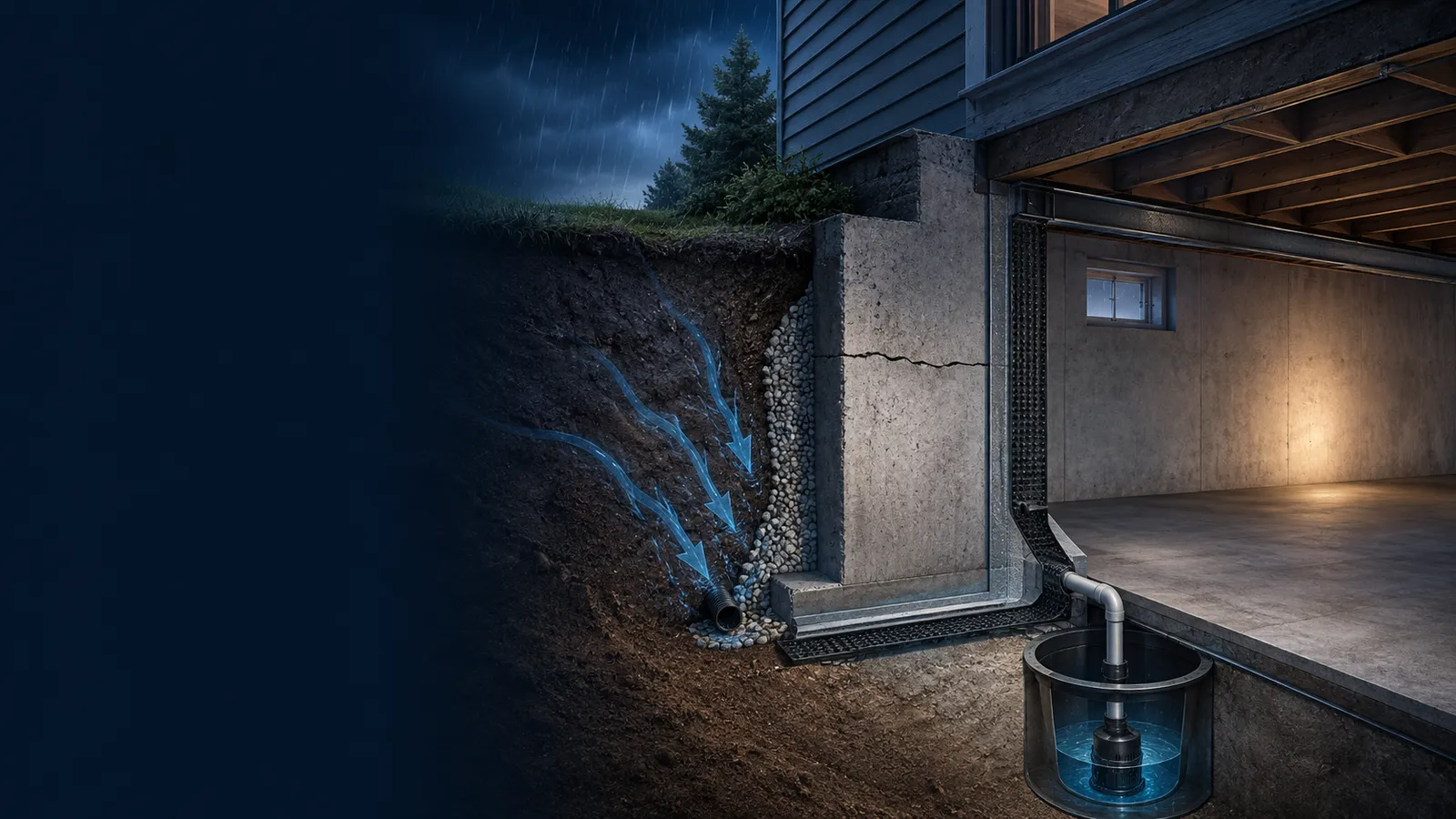
A vapor barrier over standing water just traps the water, so the order matters. If the crawl space takes on water, we handle the drainage first, adding a perimeter drain and a sump pump where water collects, the same principle we use in a wet basement. Only once the water has a way out do we lay the barrier.
Sealing the space off
We run a vapor barrier across the floor and up the walls, then seal the vents and gaps that let humid outside air in. Closed off from both the ground and the outside air, the crawl space stops acting like a moisture pump for the house. The framing above stays drier, and the air upstairs stops carrying that basement smell.
Part of the same water picture
A crawl space and a basement are the same problem in a different shape, so if your home has both, they belong in one plan. The interior waterproofing and exterior drainage we use on basements apply here too, and we would rather solve the house’s water as one system than chase it room by room.
What’s included
- A vapor barrier sealing the crawl space floor and walls
- Drainage and a sump where standing water collects under the house
- Sealing vents and gaps that let humid outside air in
- A written scope and price before any work, matched to how wet the crawl space actually is
How it works
- See how wet it is. We check the crawl space for standing water, damp soil, and where moisture is getting in, because that decides whether it needs drainage as well as a barrier.
- Drain, then seal. Where water collects we add drainage and a pump first, then lay a vapor barrier across the floor and walls to close the space off from the ground.
- Close it off. We seal the vents and gaps that let humid air in, so the crawl space stays dry and stops feeding moisture into the house.
Signs you need this service
- A musty smell in the rooms above the crawl space
- Standing water or damp soil under the house after rain
- Condensation, mold, or rot on the framing and insulation below
- Sagging insulation, or floors above that feel cold and damp
Frequently asked questions
How much does crawl space encapsulation cost in Dayton?
Is encapsulation worth it?
Does the crawl space need a sump pump too?
Fast foundation and waterproofing service across the Dayton metro
Towns we serve
Based across the Dayton metro and dispatching daily through the surrounding towns and rural routes.
- KetteringMontgomery County
- CentervilleMontgomery County
- Huber HeightsMontgomery County
- MiamisburgMontgomery County
- VandaliaMontgomery County
- OakwoodMontgomery County
- BeavercreekGreene County
- XeniaGreene County
- TroyMiami County
- SpringboroWarren County
Don’t see your town? If you’re in the greater Dayton area,call (937) 528-7504and we probably cover you.
Related foundation and waterproofing services
- Interior Waterproofing
We relieve the water with an interior perimeter drain that carries it to a sealed sump, so the floor stays dry through the wettest Miami Valley weather.
- Sump Pump Installation
We install a sealed-basin sump pump with a battery backup, so a rising water table and storm runoff leave through the pump instead of across your floor.
- Exterior Waterproofing
We excavate to the footing, seal the outside of the wall with a membrane, and add drain tile and grading so water is stopped before it ever reaches the foundation.
Need foundation and waterproofing service in the Dayton area?
Describe the problem and ask about inspection availability for your address. Appointment timing and repair options must be confirmed.